Learning Journey / Preschool

PLAYGROUP – PREP

Before subjects, there is curiosity.

Learning at VLC

PRE-SCHOOL

Young children don't experience their world in neat academic categories.

A puddle can become science, language, movement and imagination all at once. A story can lead to counting, drawing, conversation, role play and a hundred questions.

Our Preschool programme is built around that understanding.

VLC's approach has been developed and refined over ten years, drawing inspiration from respected educational practices including the Finnish education system, Reggio Emilia and the British Early Years Foundation Stage, alongside our own experience of how children learn.

At the heart of these years is an approach distinctly ours.

SNAP®

Stories. Nature. Art. Play.

Four ways into a child's world. And four powerful ways to build the foundations for everything that comes later.

STORIES

What happens after “…and then”?

Stories develop far more than a love of books.

Children listen, predict, sequence, question and retell. They encounter new vocabulary, begin making connections between ideas and discover that language can describe both the world they know and worlds they haven't imagined yet.

Long before children write their own stories, they are learning how language works.

Builds:

  • Language
  • Communication
  • Vocabulary
  • Listening
  • Imagination
  • Early literacy

NATURE

What changes when we step outside?

Nature gives children something wonderfully unpredictable to investigate.

A seed grows. A leaf changes. Mud behaves differently when water is added. An insect appears where yesterday there was none.

Through gardening, natural materials, sensory exploration and everyday encounters outdoors, children observe, compare, predict, investigate and begin asking better questions.

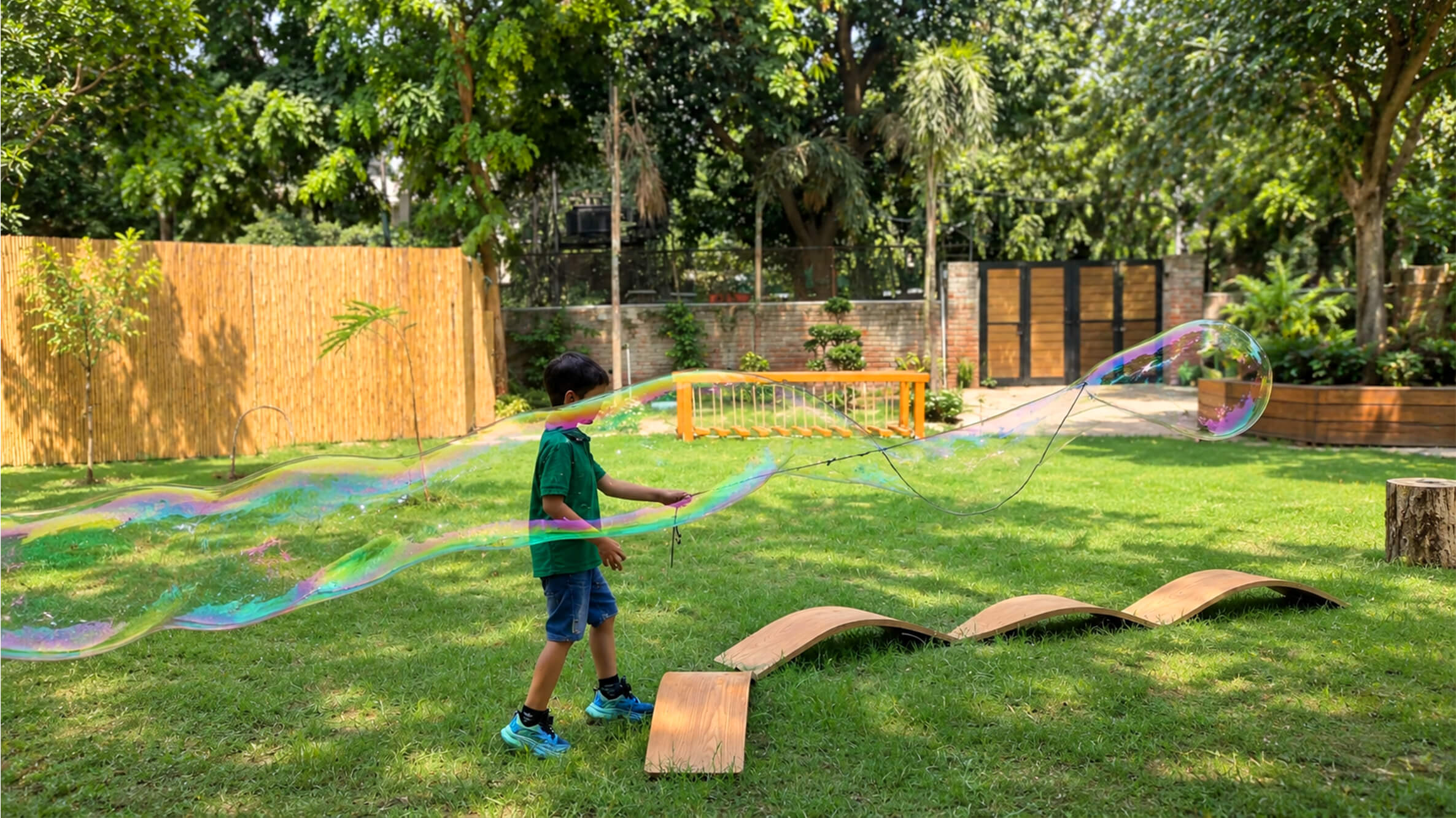
And at VLC Lahore, the garden gives those encounters room to become part of the everyday rhythm of school.

Builds:

  • Observation
  • Scientific thinking
  • Curiosity
  • Physical development
  • Environmental awareness
  • Wellbeing

ART

What colour is a giggle?

Not every idea needs words.

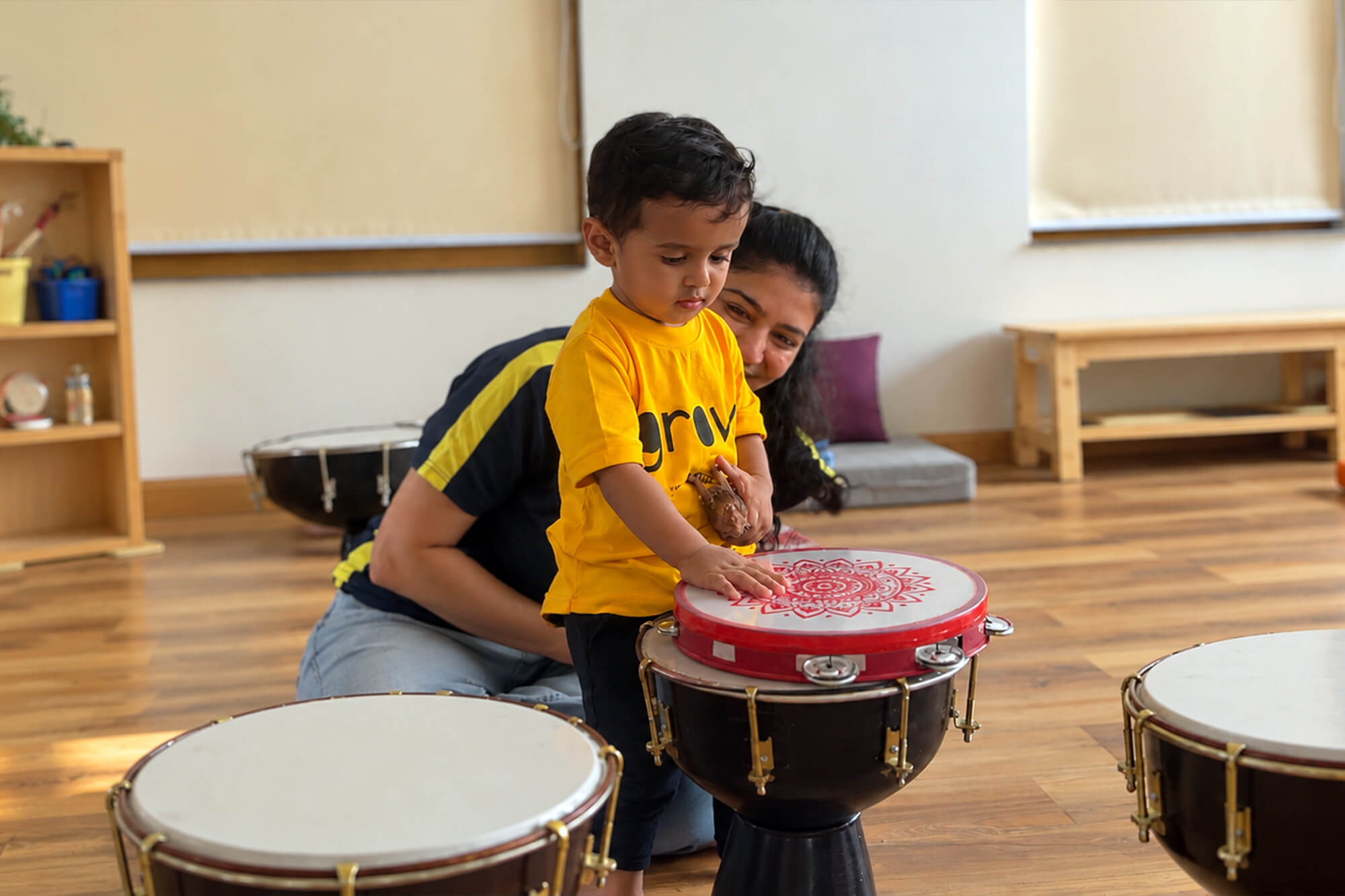
Children paint, draw, sculpt, build, move, make music and experiment with materials as ways of thinking and communicating.

The emphasis isn't on producing thirty identical pieces to take home.

It is on noticing, choosing, experimenting, expressing and discovering that an idea can take more than one form.

Builds:

  • Creativity
  • Expression
  • Fine-motor skills
  • Confidence
  • Decision-making
  • Visual thinking

PLAY

How many adventures fit inside one afternoon?

Play is where children rehearse the world.

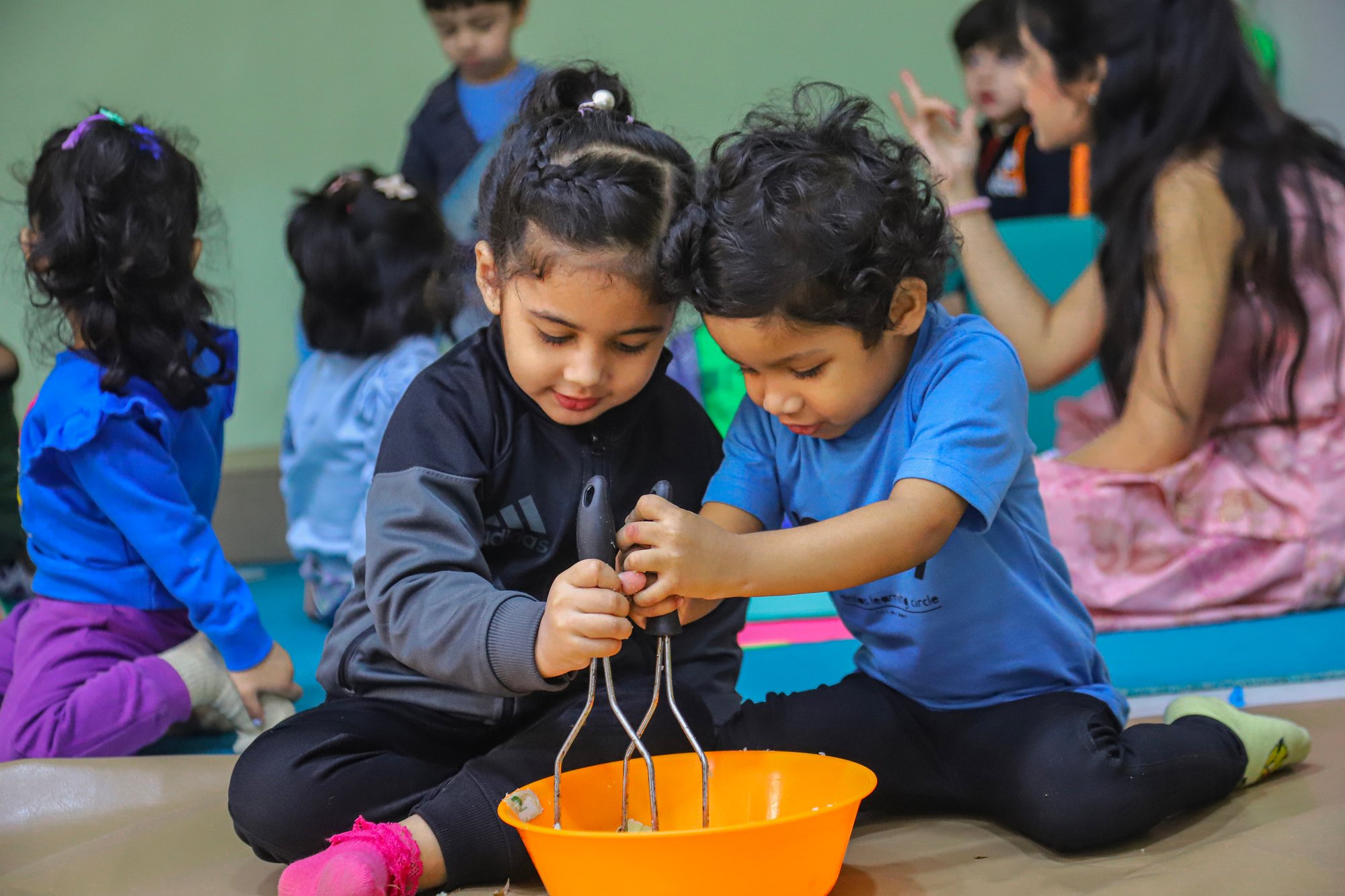
They negotiate. Invent rules. Solve problems. Take turns. Build something, knock it over and work out how to make it stand next time.

Through imaginative, sensory, social and physical play, children exercise language, mathematical thinking, relationships, independence and problem-solving simultaneously.

And because the motivation belongs to them, they want to keep going.

Builds:

  • Problem-solving
  • Collaboration
  • Independence
  • Imagination
  • Resilience
  • Early mathematical thinking

Strong beginnings don't need to be rushed beginnings.

Learning through experience doesn't mean leaving academic development to chance.

Across Preschool, teachers intentionally build the foundations children will need as learning becomes increasingly structured.

LANGUAGE & EARLY LITERACY

Stories, songs, conversation, phonological awareness, books, mark-making and emerging writing help children understand and gradually use language with increasing confidence.

EARLY MATHEMATICAL THINKING

Children encounter number, quantity, pattern, shape, measurement and mathematical relationships through both everyday experiences and increasingly intentional learning.

PHYSICAL DEVELOPMENT

Movement, coordination, fine-motor development and opportunities to use the whole body support children's growing physical confidence and control.

SOCIAL & EMOTIONAL DEVELOPMENT

Children learn to recognise feelings, form relationships, negotiate with others, manage increasing responsibility and develop a stronger sense of themselves.

UNDERSTANDING THE WORLD

Nature, materials, people, places and everyday phenomena give children reasons to observe, investigate and ask questions.

INDEPENDENCE

Doing something for yourself matters.

Children gradually take greater responsibility for their belongings, choices, routines, work and participation in their community.

The aim isn't to hurry children towards the next stage.

It is to make the foundations underneath it strong.

THE ENVIRONMENT

A place that invites wonder.

Long before a lesson begins, an environment has already started teaching.

At VLC Lahore, spaces are designed to invite children to move, make choices, encounter materials, spend time with books, work alongside others and investigate ideas independently.

And the learning environment extends beyond the classroom.

The garden gives children room to run, observe, grow, build, imagine, investigate and experience the natural world rather than only reading about it.

The environment isn't the background to learning.

It is part of the learning.

Full video

Full video link will be added.